
Competency-Mapped Product Certification
When sales reps needed a credible way to prove both knowledge and field skill, I built a role-based certification. The program mapped real competencies to practice, gave leaders one clear rubric, and delivered measurable gains in confidence, consistency, and sales results.
-
Opportunity velocity up 18 percent in 90 days after certification went live for the targeted line.
Consistent evaluations across regions using one rubric and 3 to 5 common scenarios, which improved coaching quality and fairness.
Faster path to confidence indicated by higher post-assessment self-efficacy and earlier field readiness checkpoints.
Higher quality conversations in pipeline reviews, with reps demonstrating clearer value stories and stronger objection handling.
Reps deliver the product story, handle objections, position against competition, and run structured calls with greater confidence.
-
Challenge:
Selling behaviors and messaging were inconsistent. New and existing reps lacked a standard way to practice, validate proficiency, and earn credibility on growth products. This created longer ramp time and uneven customer conversations.Goal:
Create a certification that is simple to run, fair to evaluate, and credible in the field. Map expectations to role competencies, then assess with scenario practice and evidence, not only recall.
-
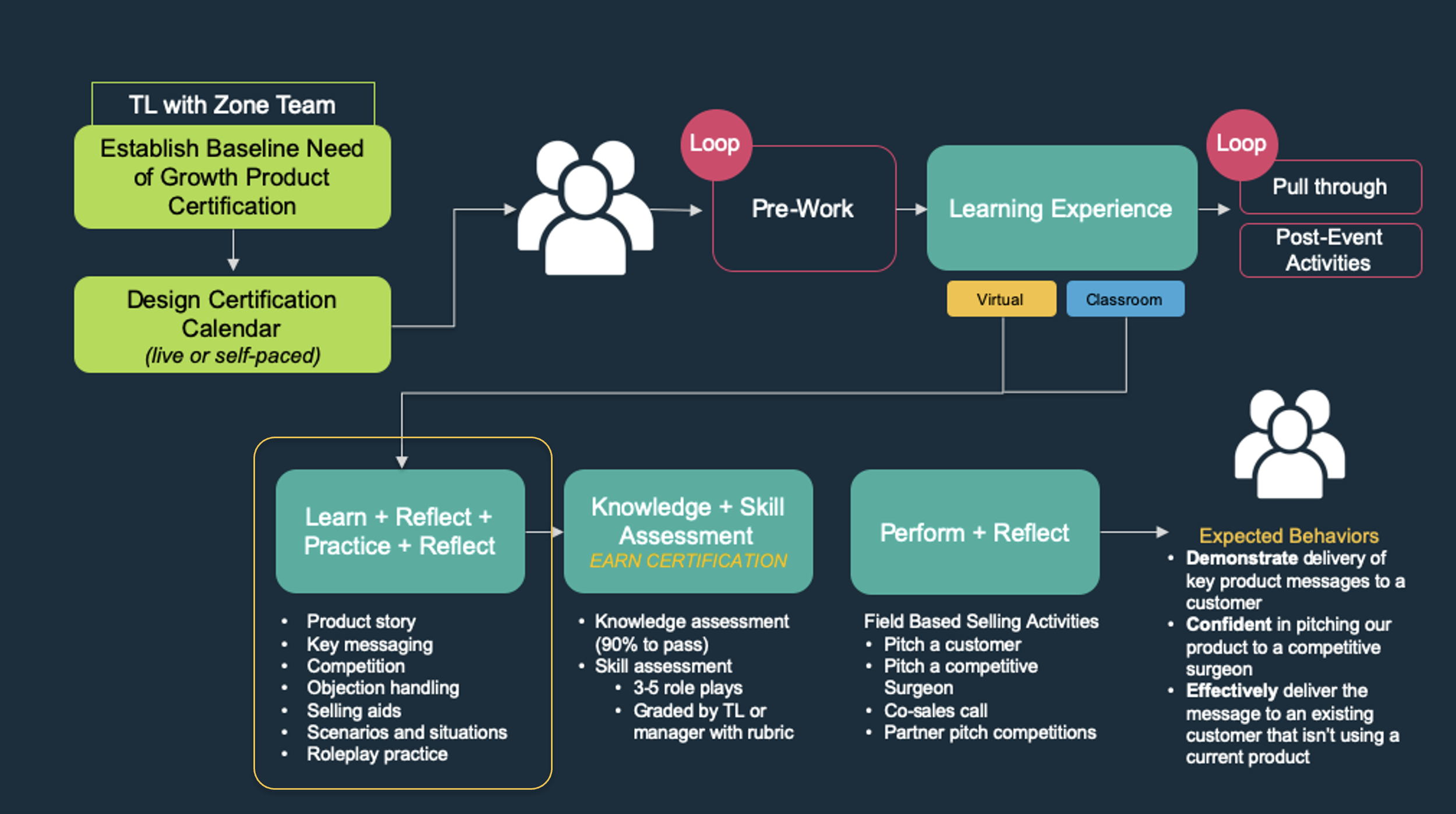
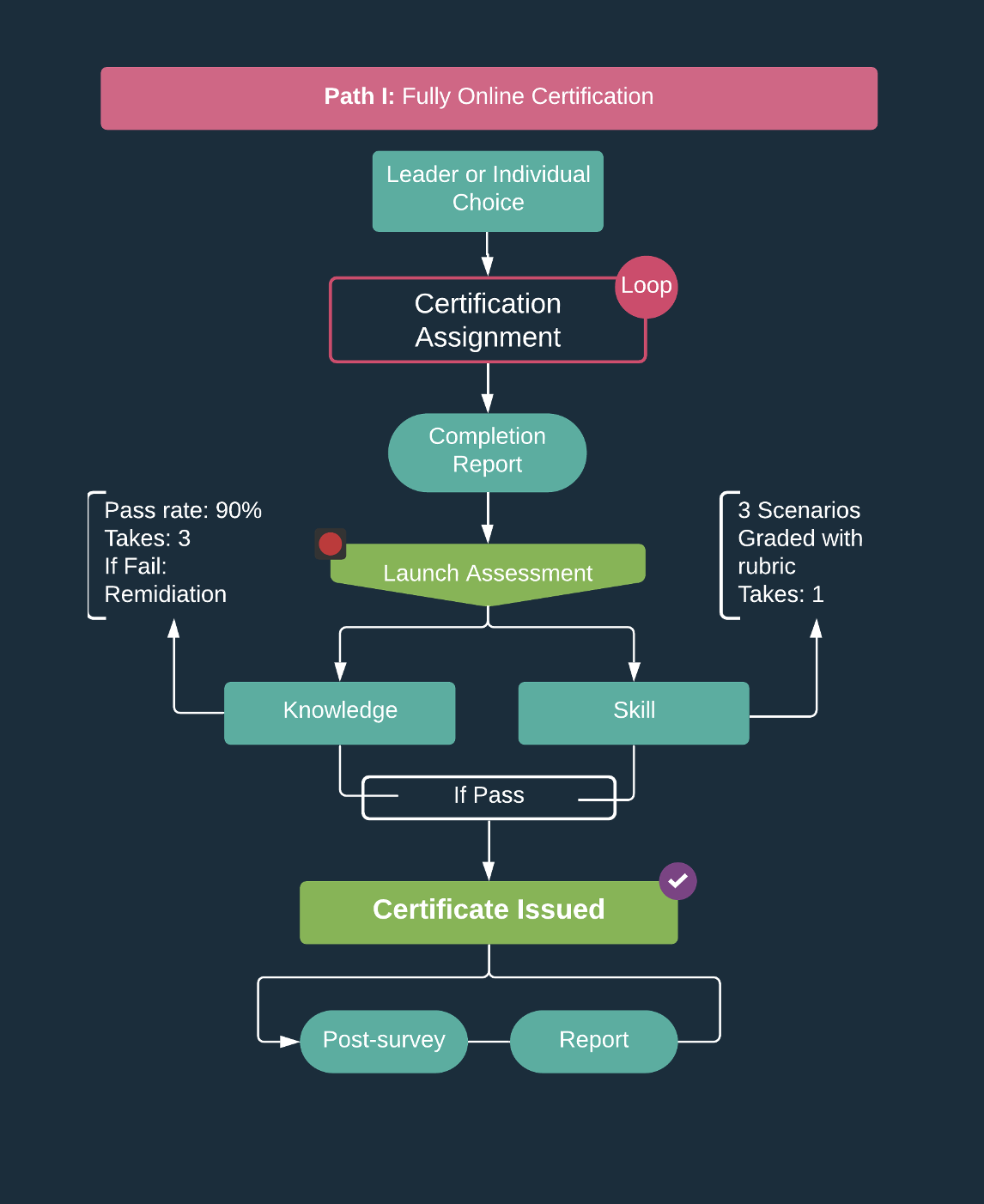
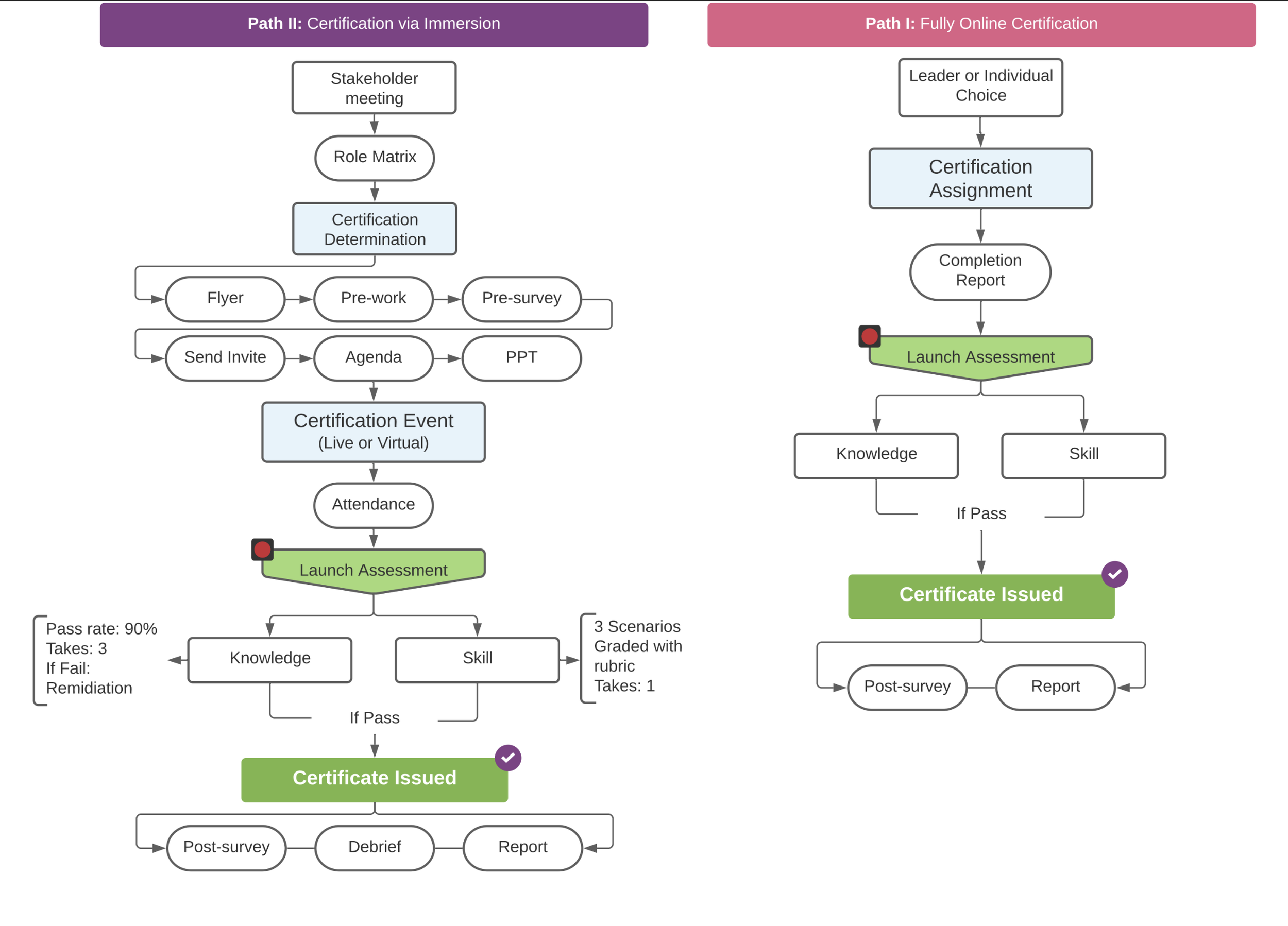
Two certification paths: fully online or immersion with live event options, both ending in the same credible credential.
Milestone gates: clear start, practice, assessment, and certificate issue points, with simple reporting and a post-survey.
Manager toolkit: observation checklists, coaching prompts, and a quick “use the rubric” guide so leaders can coach to standards.
Asset library: eLearning templates, scenario scripts, debrief guides, and job aids packaged for easy reuse across product lines.
-
Training design
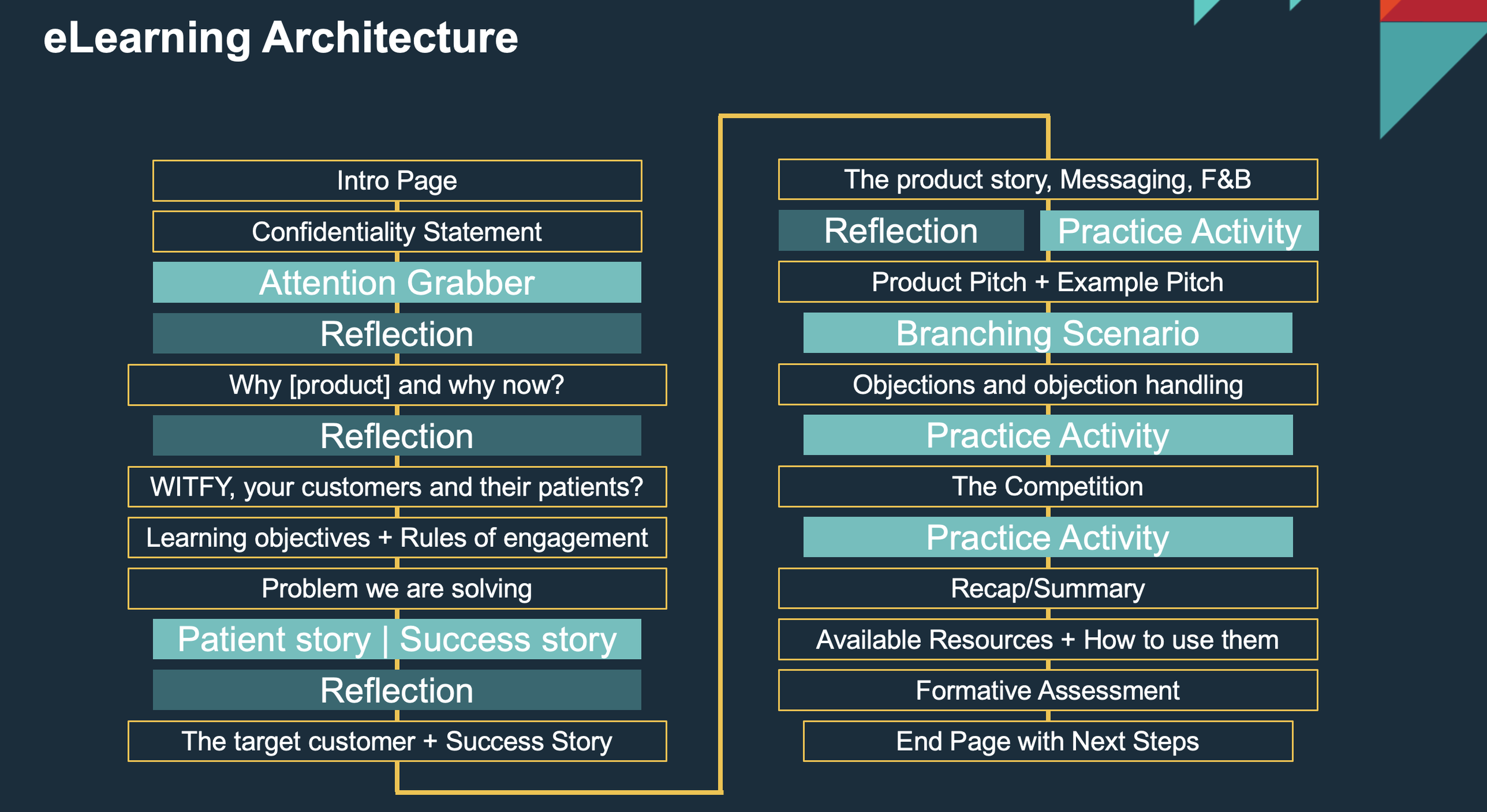
A complete learning arc that moves from attention and relevance to practice and assessment. The eLearning blueprint covers story, target customer, value, objections, competition, and a branching sales scenario. Downloadable job aids support on-the-job use.Assessment model
Knowledge check aligned to objectives with 30+ items, mixed formats, randomized options, and at least 40 percent scenario items.
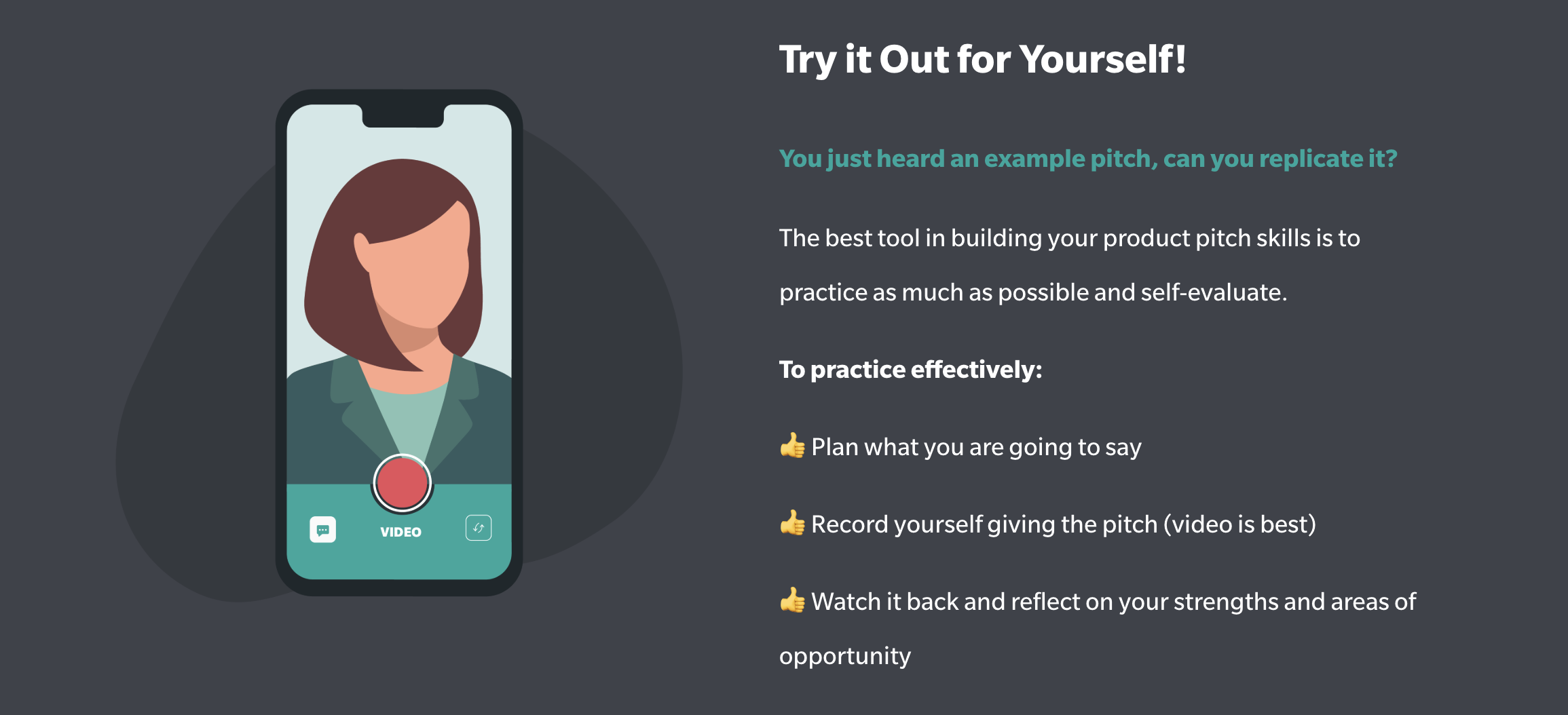
Skill check using 3 to 5 scenarios such as elevator pitch, objection handling, competitive positioning, and call execution.
Single rubric on a 5-point scale used across scenarios so evaluations are consistent for every region.
Pass standard set at 90 percent with up to 3 attempts and guided remediation.
Role-based competencies
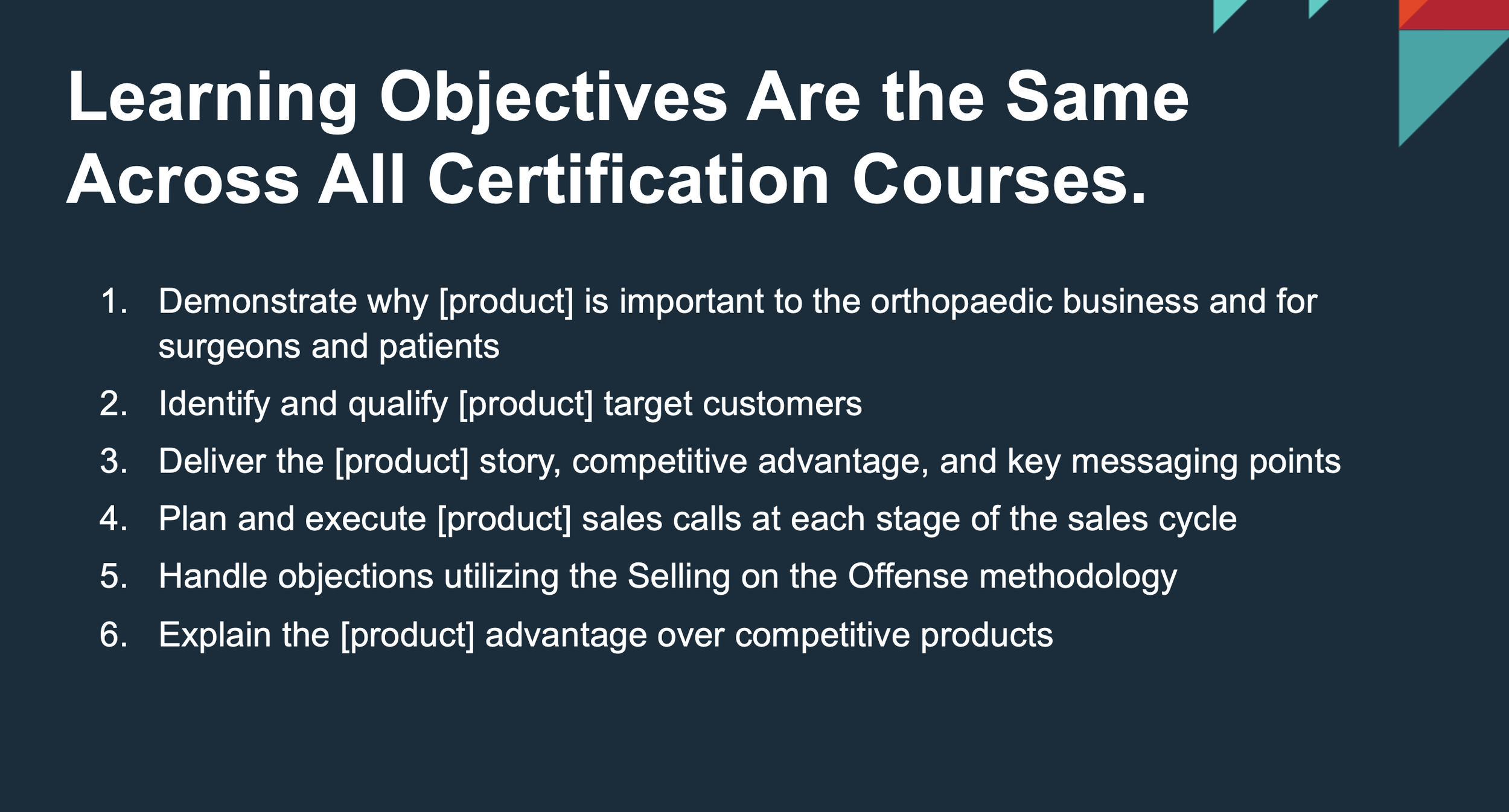
Competencies and key behaviors are mapped to assessment methods for each role, linking certification directly to field execution.
-
Learning strategy and architecture: set the role-based competency model, objectives, and evidence plan.
Instructional design: authored the eLearning blueprint, wrote scenarios, and created knowledge items with targeted feedback.
Assessment science: designed the single rubric, aligned item types to objectives, and defined the pass standard with remediation rules.
Consulting and stakeholder leadership: aligned product, sales, clinical, and enablement partners, facilitated decision workshops, and established governance.
Manager enablement: built observation checklists, coaching prompts, and a short “how to score” mini-module for leaders.
Program management: roadmap, pilot plan, success criteria, and handoff kits so the program scales across regions and product lines.